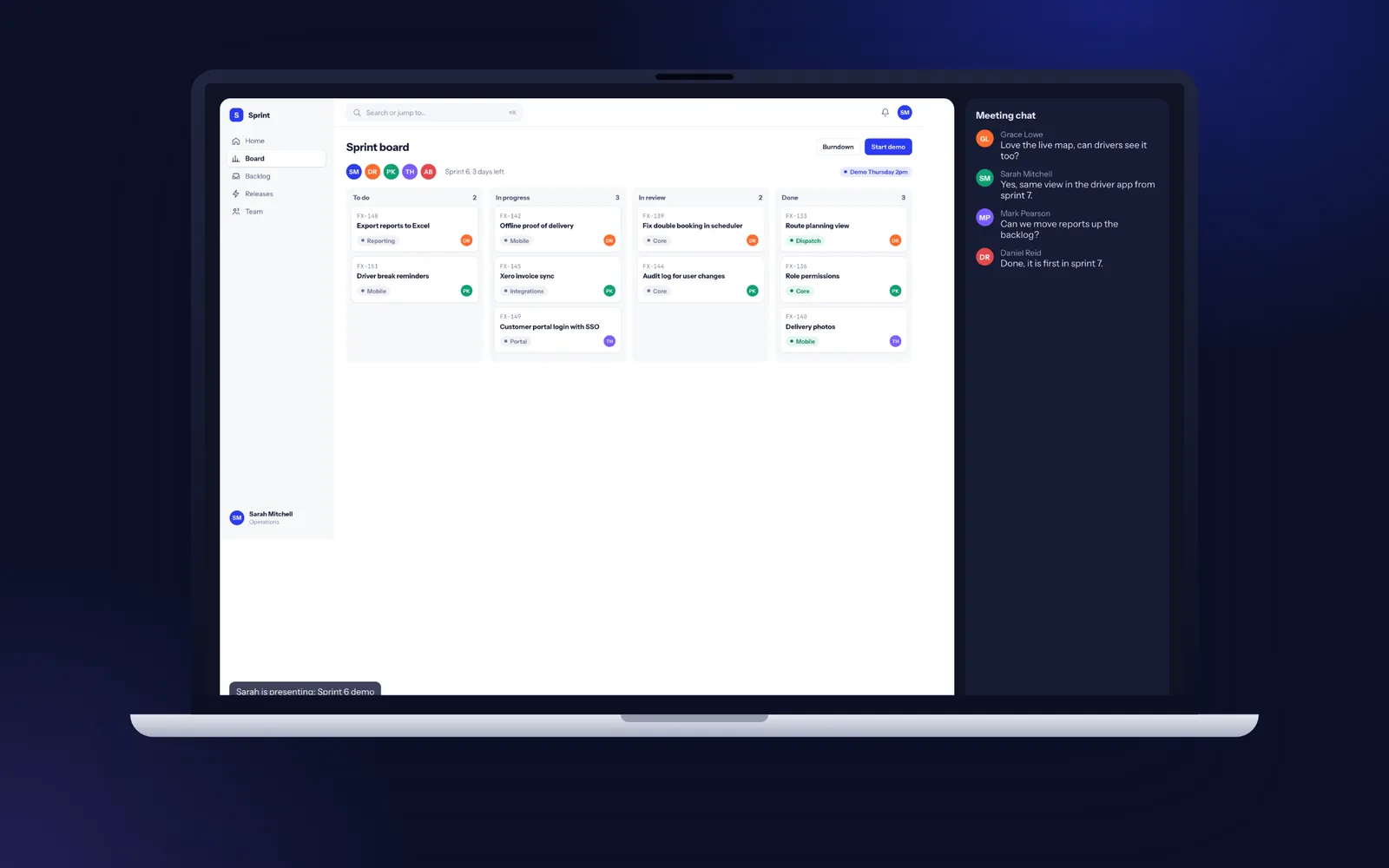
Fixology builds MVPs, mobile apps, portals and integrations for Leeds businesses, with particular depth in fintech and health tech. A web MVP typically takes 10 to 14 weeks, and an iOS and Android app with a web dashboard 14 to 22 weeks, including the DTAC, DSPT or audit evidence regulated buyers ask for. You own the code from day one and see working software every two weeks.
Leeds has two strong software markets: money and health
Financial and professional services account for about 40% of Leeds' economic output, and the city hosts offices of both the Bank of England and the Financial Conduct Authority. The council's economic vision, published in October 2025, also counts more than 3,000 digital and data companies in Leeds and names health and health tech as a priority sector, aligned with the West Yorkshire Investment Zone (Leeds City Council).
Those two sectors share a trait that matters for software: the rules are strict, and the regulator or the NHS will want evidence that the system behaves. That adds work to a first version, but it rewards suppliers who plan for compliance from the start rather than retrofitting it.
Fintech in the Northern Square Mile
Leeds fintech work tends to sit in the plumbing rather than the shop window. The common jobs:
- Lending and broker platforms that need application flows, affordability checks and document collection in one place.
- Open banking and payments connections to services such as GoCardless, Stripe or a banking-as-a-service provider, built as an integration project rather than a new system.
- Regulatory reporting that is still done by exporting three spreadsheets and pasting them into a fourth.
For a start-up, the right first step is usually a narrow MVP that proves one journey with real customers, built so that audit logging and permissions do not have to be ripped out later. Our financial services page covers the controls in more depth.
Health tech: building for the NHS without getting stuck
Selling software into the NHS involves more than a good product. Buyers will typically ask for evidence against the Digital Technology Assessment Criteria (DTAC), a completed Data Security and Protection Toolkit (DSPT), and a clinical safety case under DCB0129 if the product could affect patient care.
None of that is exotic, but it shapes the build. Sign-in, audit trails, hosting location, accessibility to WCAG 2.2 AA and a hazard log need to be in the plan from week one. We produce the technical evidence as we go; your clinical safety officer signs off the clinical side. We are not a certified medical device manufacturer and do not pretend to be.
If your product is a patient-facing app, see mobile app development and our healthcare software page.
Professional services firms behind the banks
The 40% figure is not only banks. Leeds has a deep bench of law firms, accountants, outsourcers and consultancies, and their software problems are operational. Case and matter work tracked across a practice management system and Outlook. Client onboarding with identity checks spread over three tools. Monthly reports assembled by hand from exports.
These firms rarely need one large system. They need the tools they already have joined up, and one or two focused applications where the work is specific to them. A client portal, an onboarding flow or a reporting tool usually takes 6 to 14 weeks, and each one can launch to a single team before it reaches the whole firm.
Inside a typical health app build
Take a hypothetical patient-facing app for a Leeds health tech company: patients log symptoms or readings on iOS and Android, clinicians review them on a web dashboard and get alerts when something crosses a threshold.
A build like this typically takes 14 to 22 weeks. Two pieces of work are specific to health: clinical safety scoping during discovery, and the time spent producing DTAC and DSPT evidence. Leaving them out shortens the build and then blocks the first NHS contract.
A faster route to a first pilot is to start with the clinician dashboard and a web version for patients, then add native apps once a pilot site has signed up.
West Yorkshire Business Growth Hub
In March 2026 the West Yorkshire Combined Authority launched an expanded West Yorkshire Business Growth Hub as the single front door to business support across the region, covering finance and investment, skills, innovation and technology, exporting and mentoring (West Yorkshire Combined Authority).
It will not fund a build directly, but it is the right first call to find out which grants, investment programmes or innovation support are open when you are planning. R&D tax relief may also apply to genuinely novel technical work.
How we work with Leeds businesses
We are not based in Leeds. Fixology is a remote team with its registered office in Luton. We travel to you for discovery workshops, user testing sessions and launch, and run everything else in two week sprints with a demo on a test link at the end of each.
The code lives in your repository from day one and hosting is in your name, in UK or EU regions, which matters to NHS and FCA-regulated buyers alike. After launch, a support plan covers fixes, updates and security patches. The how we work page explains each stage.