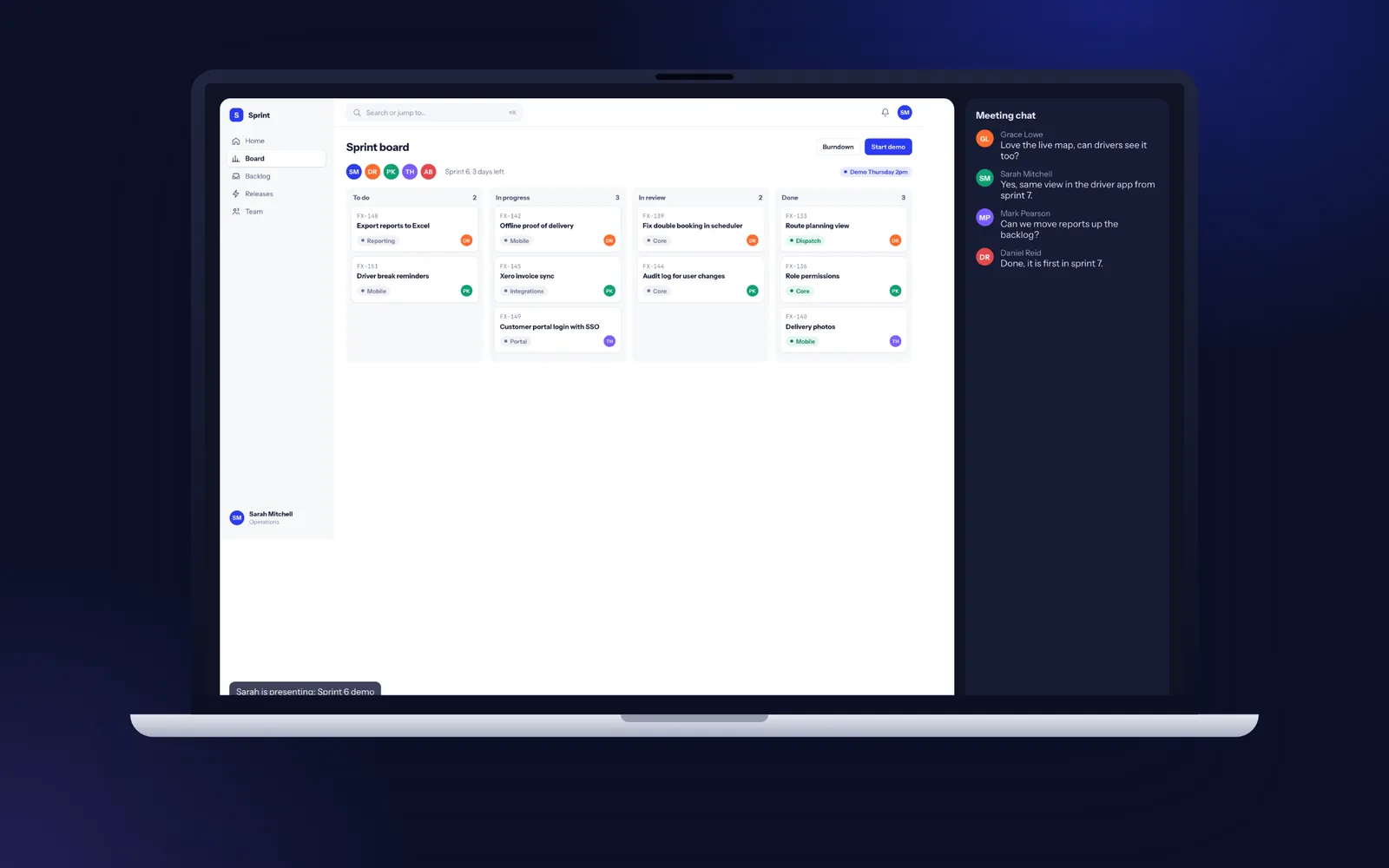
Fixology builds operations systems, web applications and integrations for Greater Manchester businesses with a senior UK team. A typical operations system or internal web app takes 10 to 16 weeks, and a single integration such as Shopify to Xero takes 3 to 6 weeks. You see working software every two weeks, the code is yours from the first commit, and we come to Manchester for discovery, user testing and launch.
Manchester's technology scene in a few facts
Manchester is one of the few UK cities outside London where large technology employers compete with each other for developers. A few verifiable markers:
- MediaCity in Salford is home to more than 250 media, tech and creative businesses, alongside the BBC and ITV (Landsec, May 2025).
- Auto Trader has been based in Manchester since 2014 and is moving its head office to Circle Square in early 2026, taking more than 900 staff including an in-house team of around 400 data scientists and engineers (Auto Trader, January 2025).
- GCHQ opened a Manchester site so it could recruit from the city's pool of technical talent (GCHQ).
For an ordinary business that wants software built, this has one practical effect: good developers in Manchester have options, which shapes the build versus hire decision below.
What Greater Manchester firms tend to need
Greater Manchester's economy is broad: media and creative work around Salford Quays, online retail and distribution, professional services in the city centre, and manufacturing across the ten boroughs. The software problems that follow are fairly predictable.
Online retailers outgrowing their plugins
A brand selling through Shopify reaches the point where stock, returns, wholesale orders and courier bookings live in five apps and two spreadsheets. A small operations system behind the shop, plus clean API integrations to Shopify, the courier and Xero, usually removes a full-time job's worth of copying and pasting.
Media and creative production tracking
Production companies and agencies juggle bookings, rights, crew, edit suites and approvals. Generic project tools cope until the volume grows, then the gaps get filled by email. This is where workflow automation earns its keep.
Manufacturers and distributors with an ageing system
Firms running on a 15 year old Access database or a desktop app nobody can update are often better served by a staged rebuild as a web application than by a big-bang replacement.
Hiring in Manchester versus bringing in a team
With Auto Trader, the BBC, GCHQ and others recruiting engineers in the city, a small firm hiring its first developer is competing for the same people. Hiring makes sense when software is your product and you have years of work ahead.
For a single system with a defined scope, one hire rarely covers design, testing, hosting and security on their own, and the project stalls if they leave mid-build. A dedicated team brings all of those from week one. When the build is done, an in-house developer can take it over, because the code is already in your repository with documentation and tests.
Inside a typical Manchester operations system
Take a hypothetical example: a Manchester brand selling through Shopify and to wholesale accounts. The system we would build puts orders, stock, returns and wholesale accounts in one place, books couriers automatically and pushes sales into Xero. It typically takes 10 to 16 weeks.
The biggest piece of work is the order and stock workflow, because that is where the business rules live: what happens to a part-returned bundle, which warehouse ships a split order, when a wholesale customer goes on stop. Those rules come out of discovery, which is why the plan is fixed only after it.
Launch is staged. One warehouse or one sales channel goes first, the team works with it for a fortnight, and the rest follows once the rough edges are gone.
GM Business Growth Hub and other local help
The GM Business Growth Hub is Greater Manchester's publicly funded business support organisation, with specialists in all ten local authorities and support delivered at no charge to the business. It covers funding, innovation, people, sales and sustainability (GM Business Growth Hub).
It is worth a call before you commission software. An innovation adviser can sanity-check whether the project is really a software problem, and the funding team will know which grants and loans are open at the time.
When a Manchester firm should not build at all
Some of the best calls we make end without a build. If your process is close to how most businesses in your sector work, a well configured off-the-shelf product will usually serve you better than bespoke software, and we will tell you so.
Bespoke starts to make sense when the way you work is the reason customers choose you, when several tools each do a third of the job, or when workarounds have pushed staff back onto spreadsheets. Our comparison of bespoke vs off-the-shelf software walks through the decision.
How a Manchester project runs with us
We are a remote team with a registered office in Luton, not a Manchester agency, and we do not claim otherwise. We travel to Manchester for the parts of a project that work better face to face: the discovery workshop, user testing with your staff, and launch.
Between those visits you get a demo on a test link every two weeks, a shared board, and answers within one working day. Automated tests run on every change, and the code is in your repository from the first day. After launch, a support plan covers fixes, updates and security patches. The how we work page explains each stage.