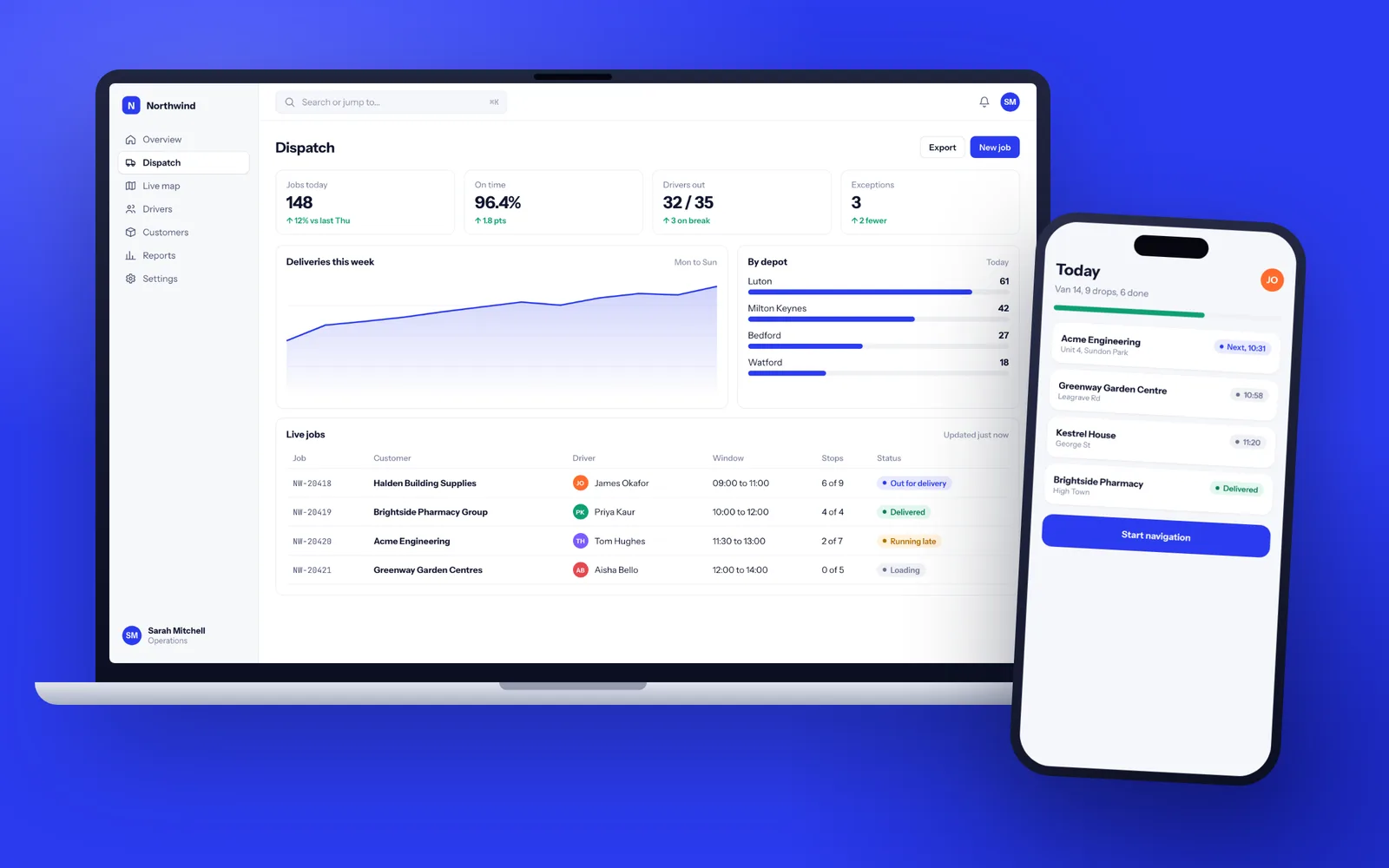
Fixology builds bespoke software for UK charities and membership bodies: member portals for joining, renewals and CPD, Gift Aid capture and claim automation, grant portals, service user case management, and integrations with Salesforce, Beacon, Donorfy, GoCardless and Stripe. A member portal typically takes 10 to 14 weeks and is timed to go live before your renewal season opens. Every build is accessible to WCAG 2.2 AA, hosted in UK or EU regions, and owned by you from day one.
Supporter CRMs and the jobs they leave behind
Most UK charities of any size now run a dedicated supporter CRM. Larger organisations tend to use Salesforce, with the Nonprofit Success Pack or the newer Nonprofit Cloud, Blackbaud Raiser's Edge NXT or Microsoft Dynamics 365. Small and mid-sized charities often choose Beacon, Donorfy or ThankQ, and some still run CiviCRM. All of them hold supporters, donations and campaigns well.
What they handle less well is everything specific to your organisation: a membership scheme with grades and CPD requirements, a grant programme with its own assessment rules, a helpline or support service with confidential case notes, or a volunteer rota across dozens of shops. These tend to end up in spreadsheets and shared inboxes, which is where data protection risk builds up and supporter relationships fray.
Gift Aid without the year-end scramble
Gift Aid lets a charity reclaim the basic rate tax a UK taxpayer has paid on their donation, provided they have made a valid declaration. Claims go to HMRC through Charities Online, and must be made within four years of the end of the financial period in which the donation was received. The Gift Aid Small Donations Scheme lets eligible charities claim on small cash and contactless donations without declarations, within annual limits set by HMRC.
Claims usually go wrong in the plumbing: declarations collected on paper and never keyed in, online donations from a platform that does not pass the declaration through, or claims that stop when the volunteer who ran them leaves. An integration that captures declarations at every point of donation, checks them, matches them to donations and produces the claim file on a schedule turns Gift Aid from an annual scramble into a routine your finance team reviews and submits.
Membership bodies: joining, renewals and CPD
Professional associations and membership charities run on renewals. A member portal lets people join online, choose a grade, pay by Direct Debit through GoCardless or by card through Stripe, and manage their own details. Renewal reminders go out automatically, failed payments are retried and followed up, and lapsed members get a simple way back.
For professional bodies, the portal also holds CPD. Members log activity against your scheme's requirements, upload evidence, and see their progress for the year, while your team samples records for audit without chasing paper. Events, online learning and member-only resources can sit in the same login, so members have one account rather than four.
Accessibility is not optional here. Membership bodies and charities serve people of every age and ability, so we build portals to WCAG 2.2 AA, test them with keyboard and screen reader, and keep journeys short enough to finish on a phone. A renewal that takes three taps keeps more members than one that needs a desktop and a password reset.
Fundraising rules, consent and supporter data
Charities that fundraise are expected to follow the Code of Fundraising Practice and to respect requests made through the Fundraising Preference Service. UK GDPR and the electronic marketing rules in PECR decide what you can send to whom, and on what basis.
Software makes that manageable by recording consent and contact preferences with the date and source, suppressing anyone who has opted out in every system at once, and keeping a history that answers a supporter's subject access request in minutes. If you hold sensitive information about service users, such as health or immigration status, the bar is higher still: access by role, full audit logs and hosting in UK or EU regions are the minimum. Our security page explains how we apply them.
Grants, volunteers and service delivery
Grant-making trusts and community foundations often manage applications by email and spreadsheet. A grant portal takes applications against your criteria, routes them to assessors with scoring forms, records panel decisions, and tracks monitoring reports after the award. Applicants can save a draft and come back, which matters for small groups filling forms in the evening.
Charities that deliver services need something different: a case management system for clients or beneficiaries, with referrals, appointments, outcomes and confidential notes, plus reporting to funders that does not take a week each quarter. Volunteer-led charities often need rotas, training records and DBS tracking. These are the jobs where a packaged CRM tends to be stretched the furthest.
Reporting is the common thread. Funders want outputs and outcomes in their own format, trustees want a dashboard, and the Charity Commission annual return needs figures from across the organisation. When service data and volunteer hours sit in connected systems, each report becomes a saved filter instead of a fortnight of copying numbers between spreadsheets.
A typical example: a professional body with 9,000 members
Here is a hypothetical scenario. A professional association with 9,000 members runs an ageing membership database, takes renewals by bank transfer, tracks CPD in a separate spreadsheet, and has just moved fundraising for its benevolent fund into Beacon. Renewal season takes two staff out of action for six weeks.
The first phase would be online joining and renewal with Direct Debit, CPD logging, and a nightly sync of members and payments into Beacon so one CRM holds the whole relationship. A later phase could add events and online learning. The old database becomes a read-only archive once the data has been migrated and checked.
Building in phases around your CRM and funding cycle
Charities often fund technology through restricted grants or a single capital project, so we scope builds in phases that each deliver something useful on their own. A discovery phase produces a written specification and delivery plan, and many charities use that document to support a funding bid or a trustee decision.
Before building a bespoke CRM, compare it honestly with configuring Salesforce or a charity CRM; our guide to bespoke versus off-the-shelf software sets out how to decide. Connecting your existing tools through integrations is often the better first step, and it leaves your fundraising team in the system they already know.
Why charities and membership bodies choose Fixology
We aim to be the UK's leading bespoke software company for charities and membership organisations, and that means software that staff, volunteers and members can all use without training. A senior UK team builds in two-week sprints with a working demo on a test link, and launches are planned around your renewal cycle and fundraising calendar rather than our convenience.
The code sits in your repository and the hosting in your cloud account from day one, so the software stays an asset of the charity whatever happens to any supplier. After launch we support and improve the system, and we hand over documentation your trustees and auditors can follow.