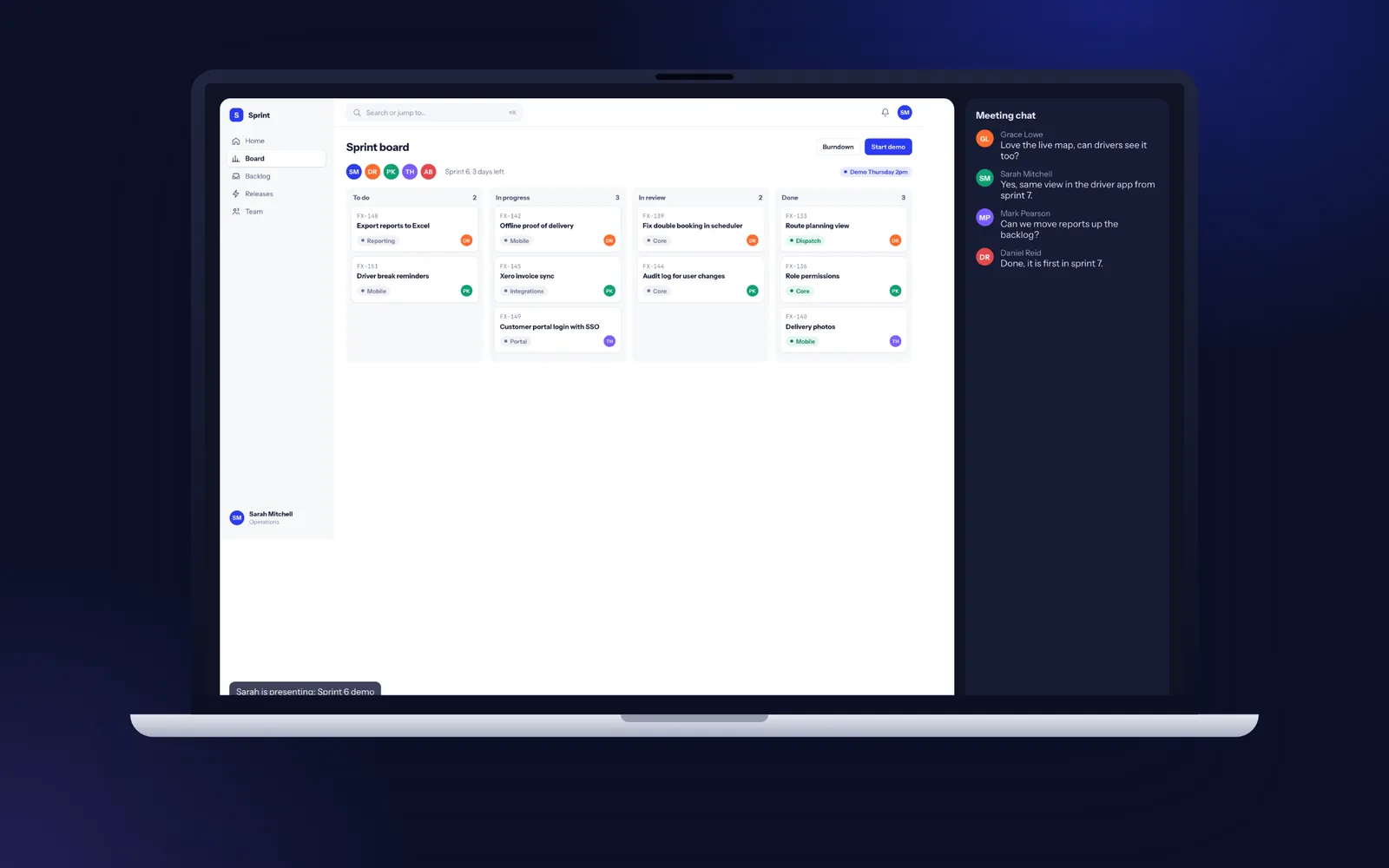
An AI document processing tool for a Newcastle business, with a staff review screen and an integration into Sage or Xero, typically takes 8 to 12 weeks; a data dashboard joining two or three systems takes 4 to 8 weeks. Every project starts with a discovery of one to three weeks that tests your real documents and data before the build begins. You own the code, and hosting sits in your own UK or EU cloud account.
Newcastle's data and digital economy
The North East Combined Authority says the region's digital industry employs close to 35,000 people in over 3,500 creative and digital businesses. It names Sage, the FTSE 100 accounting software company, Ubisoft's largest UK games studio and a BBC tech hub among the employers (North East Combined Authority).
At the centre of Newcastle sits Newcastle Helix, a city centre innovation district whose focus is data science, urban science and life science (Newcastle Helix). For most North East firms, though, the software question is more down to earth: how to get information out of documents and spreadsheets and into systems where it can be used.
Use the National Innovation Centre for Data first
The National Innovation Centre for Data, based at The Catalyst on Newcastle Helix, works with businesses, public bodies and charities to build data skills inside their own teams and to advise on data projects (NICD).
If your problem is that nobody in the business knows how to analyse the data you already have, start there. Skills transfer is often a better first step than commissioning software. Where we come in is the next stage: once you know what you want to do with the data, building the pipeline, the dashboard or the tool that does it every day without anyone exporting a CSV.
Where AI helps a North East business, and where it does not
AI earns its keep on repetitive reading. Typical examples for regional firms:
- Supplier invoices and delivery notes arriving as PDFs in every format imaginable, keyed into Sage or Xero by hand.
- Application forms and supporting documents in housing, care or financial services, checked against a list of rules.
- Engineering and maintenance reports where someone pulls the same ten fields out of every one.
It helps much less when the data is already structured, when one error matters and nobody will check the output, or when the volume is a few documents a week. In those cases a simple form, an integration or plain workflow automation is simpler and more reliable. Our AI development page sets out how we test whether a model is accurate enough before you depend on it.
Inside an AI document processing project
A typical project is for a business receiving a few hundred documents a week. Documents arrive by email or upload, a model extracts the fields and checks them against your rules, and anything uncertain lands on a review screen where a member of staff confirms or corrects it before the data goes into your accounts or line-of-business system.
Over 8 to 12 weeks it runs like this:
- Discovery with a sample of real documents, including the messy ones, so accuracy is measured rather than promised.
- Intake and extraction, with validation rules your team already applies by eye written down as code.
- The review screen, which gets as much attention as the AI itself. A system that lets people catch errors quickly is what makes the automation safe to use.
- Integration with Sage, Xero or your own system, so approved data lands where it is needed.
- Accuracy testing and launch, with every extraction logged so you can see how the model performs over time.
The software problems we see across the region
North East businesses tend to share a handful of problems, whatever the sector:
- Reports built by hand every month. Someone exports from three systems, pastes into a spreadsheet and emails it round. A dashboard that pulls the same figures automatically gives managers today's numbers, not last month's.
- Customers who phone for updates. Engineering, maintenance and service firms answer the same status questions all day. A customer portal showing jobs, documents and reports takes those calls away.
- Two systems that do not talk. Jobs in one tool, invoices in another, and a person copying between them. An integration closes the gap without replacing either.
None of these needs a large programme of work. Each is usually a focused build of 4 to 12 weeks, and each removes work your team does every week.
North East Growth Hub
The North East Growth Hub, run by the North East Combined Authority since 2024, helps businesses find support and is the local partner for the national Business Growth Service (North East Growth Hub).
Speak to them before you commission a build: programmes open and close through the year, and the advisers will know what is live and whether your problem is really a software one.
How we work with Tyneside clients
We are not based in the North East and do not claim a local team. Fixology is a remote team with its registered office in Luton, and most of the work runs remotely: a demo on a test link every two weeks and replies within one working day.
We travel to Newcastle when being in the room makes the software better: the discovery workshop, user testing with the people who will use the system every day, and launch. For a document processing tool, user testing means sitting beside the staff who will clear the review queue and watching where they hesitate.
You own the code from day one and the hosting is in your name, in a UK or EU region. That matters for AI projects in particular: your documents stay in your account, not ours. Our security page covers the detail.